How to Restore Rusty Cast Iron
Disclosure: This page contains affiliate links. If you buy through them we may earn a commission at no extra cost to you. As an Amazon Associate I earn from qualifying purchases. Details.
Flea-market find or a pan someone left soaking? The fix is the same. These steps follow Lodge's published restoration instructions.
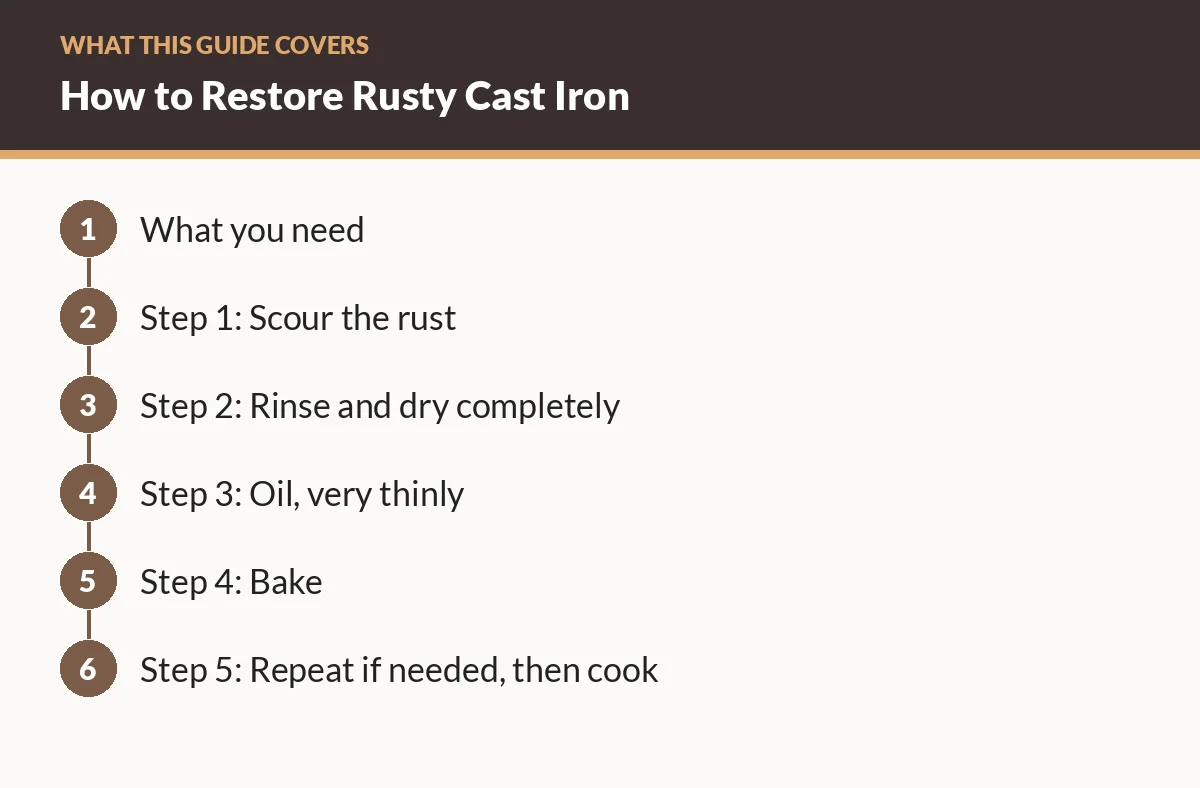
What you need
- Steel wool or a rust eraser Rust erasers → Amazon
- Dish soap and a stiff brush
- Lint-free cloth or paper towels
- A neutral, high-smoke-point cooking oil (see oils compared)
- Aluminum foil and an oven
Step 1: Scour the rust
Scrub the rusty areas with steel wool in warm, soapy water. It's fine if some seasoning comes off; you're about to rebuild it.
Step 2: Rinse and dry completely
Towel-dry, then warm the pan on a low burner for a few minutes to drive off remaining moisture. Water left behind is what caused the rust.
Step 3: Oil, very thinly
Wipe a thin layer of oil over the whole pan, inside and out, handle included. Then wipe again as if you were trying to remove it. Lodge's warning: you want a layer thin enough that it won't drip or run when tilted. Too much oil is the cause of sticky, blotchy seasoning.
Step 4: Bake
Put foil on the lower rack. Place the pan upside down on the center rack. Heat the oven to 450-500°F and bake for 1 hour, then turn off the oven and let the pan cool inside it.
Step 5: Repeat if needed, then cook
One round restores a usable surface. A second or third round deepens the color. After that, Lodge's advice is simply to cook with it: every use with oil or fat adds seasoning.
Troubleshooting
| Problem | Likely cause | Fix |
|---|---|---|
| Sticky or tacky surface | Too much oil | Bake again upside down; use less oil next round |
| Black flakes coming off | Layers not fully bonded | Lodge: scrub with a nylon brush or salt, rinse, dry, oil; reseason if it continues |
| Dark residue on towel | Normal; acidic food or high heat | Keep cooking; Lodge says it works itself out |
| Rust returns | Pan stored damp | Dry on the burner after every wash |
Keep it from coming back
Don't soak it, never use the dishwasher, dry it fully, and oil lightly after washing. A chainmail scrubber → Amazon handles stuck food without soaking.
Daily care that prevents rust
Lodge's everyday routine is three steps: wash with warm, soapy water and a stiff brush or scrubbing pad; dry completely with a paper towel or lint-free cloth; and oil with a thin layer spread over the whole surface. Lodge's FAQ adds:
- Don't soak it. For stuck-on food, use a nylon brush or pan scraper under warm water.
- No dishwasher. It removes seasoning and likely causes rust.
- Steel wool is for rust, not daily cleaning.
Vintage and flea-market pans
The same steps work on old pans. Lodge says not to throw away a skillet that's a little, or a lot, rusty. Before you buy or restore an old pan, check that it isn't cracked, that it sits flat, and that it isn't deeply pitted. Rust comes off; cracks don't.
How many seasoning rounds?
One round makes the pan usable. Lodge says to repeat as needed for a darker finish, and that cooking is the best way to keep building seasoning. If the surface is sticky after a round, you used too much oil. Bake it again and use less next time.
FAQ
Is a rusty cast iron pan ruined?
Usually not. Lodge says rust can be fixed at home by scouring with steel wool, washing, drying, oiling, and reseasoning in the oven.
Can I use soap on cast iron?
Yes. Lodge says modern dish soap is not strong enough to remove seasoning.
Can I use steel wool?
Lodge does not recommend it for daily cleaning, but says steel wool or a metal scrubber is fine for removing rust.
What temperature do I reseason at?
Lodge's current instructions say 450-500°F for one hour, upside down, with foil below to catch drips, then let it cool in the oven.
Related guides
- Best Oil to Season Cast Iron: Seasoning Oils Compared
- Cast Iron Skillet Buying Guide: Size, Weight, and Finish
- Cast Iron Gifts Under $25, $50, and $100